CC

Strategic operations · AI transformation · Chief of staff · Product leadership

Chris Crilly

Alignment where it doesn't yet exist.

For thirty years, twenty of them at Microsoft, I've walked into rooms where people didn't yet understand each other and left them with a shared language and a system that kept them moving together. I'm looking for the next room.

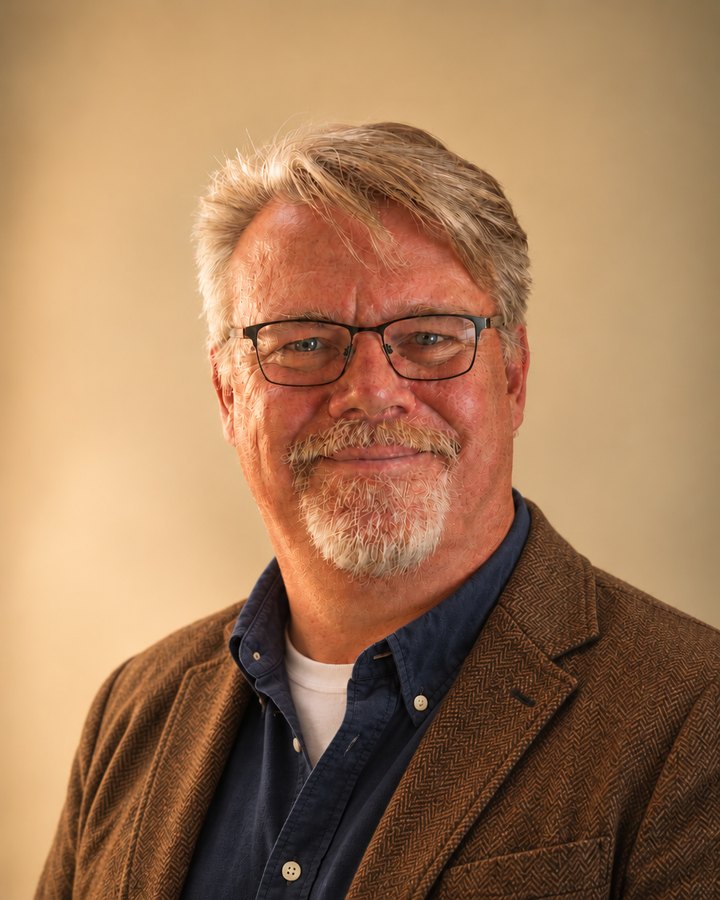
Chris Crilly, smiling, in a brown tweed jacket over a navy shirt

01 The same move, across three decades

Different companies, different decades, one pattern: find the place where people don't share a language yet, build that language, then build the system that makes it last.

Drag to align. Everyone's right, and no one agrees.
  1. 1996

    Sierra On-Line Localization Manager

    Turned localization from a side task into a core function. Wrote the standards the whole company shipped by, and was the link between Dublin, France and the U.S., including StarCraft's Asia release.

  2. 1999

    The startup years Point Control · Cornerdrugstore.com · NewHaven Software

    Ran international distribution, then development, test, product and production for a 45-person startup, then a whole small business end to end. Customers heard, software shipped, rent paid, people paid.

  3. 2005

    Microsoft Tier 3 support → operations manager → people manager

    Started on the support floor. Ran operations for the Legal & Corporate Affairs portfolio, earned an Office of the Chairman award for the Gates/Ballmer "Mail Admin" release, then led a team of eleven.

  4. 2011

    Service management Featherweight Service Management · Un1ty

    Negotiated dozens of SLAs across organizations, then built Un1ty, a service framework adopted across Microsoft IT and product group lines. Core contributor to the internal release of Power BI.

  5. 2017

    MyHub → Viva Connections Senior Program Manager

    Helped grow Microsoft's internal employee platform from early vision to 56,000+ monthly users, then guided its move into Viva Connections.

  6. 2022

    Strategic operations, Microsoft Digital Principal Product Manager

    Built the operating model for five teams across the US and India, and led the deployment of 14 AI agents used by 200+ employees.

  7. 2025

    Independent AI builder Nirmanakaya

    Designed, built and shipped a production AI application alone, from prompt architecture to deployment.

02 Four stories

Product strategy · Adoption

MyHub: from a vision to 56,000 people a month

The problem. Microsoft employees had too many places to get simple things done, and nine different groups each owned a piece of the fix: product, engineering, design, research, HR, finance, support, marketing and operations.

What I did. Ran the alignment forums and executive reviews that brought 50 to 75 senior leaders to the same table, and owned the platform's executive story: one honest, decision-ready narrative built from dozens of voices, delivered monthly to CVP-level leadership.

What changed. MyHub became one of Microsoft's most widely adopted internal platforms, then carried its capabilities into Viva Connections.

56k+
monthly active users
95%
positive sentiment
92%
task success
71%
faster than legacy

AI transformation · Hands-on

Fourteen agents, most of them built by hand

The problem. OKR data lived in many places, and turning it into the communications leaders needed for decisions, escalations and presentations took people hours every month.

What I did. Led the deployment of 14 AI agents and built most of them myself. They pulled OKR data from across sources and drafted executive communications. When overlapping agents started to appear, I began forming a cross-functional team to consolidate them into one hub.

What changed. Agentic work became an everyday tool across the organization instead of a demo.

14
AI agents deployed
200+
employees using them
~5 hrs
saved per person, monthly

Operating models · Coalition building

Un1ty: one way to run a service, across lines that didn't share one

The problem. Microsoft IT and the product groups ran services in their own ways, so every hand-off between them was a negotiation.

What I did. Built on the "Featherweight Service Management" approach I'd developed (adopted by several organizations because it was fast and light) and created Un1ty, an end-to-end framework for setting up, running and maturing a service.

What changed. Un1ty was adopted across IT and product group boundaries, and it helped bring Microsoft's internal Power BI service to release.

Global operations · Early career

Sierra: writing the rulebook for shipping games worldwide

The problem. In the late '90s, Sierra was shipping games into many languages, and localization was still an emerging function without shared standards.

What I did. With a GED and a lot of self-taught programming behind me, I wrote the localization standards, requirements and processes the whole organization adopted, and coordinated release execution between Dublin, France and the U.S.

What changed. Localization became a core company function supporting the full portfolio, including StarCraft's Asia release.

03 How I think

  1. Say the hard thing, and keep the trust.

    The person leaders rely on isn't the one with the best news. It's the one who surfaces the real risk in a way that keeps everyone at the table.

  2. Find the shared language first.

    Most disagreements are translation problems. Once engineering, HR and finance mean the same thing by the same word, the decision usually gets easy.

  3. Make the process as light as it can be.

    Process exists to help people move. If it's heavier than the work, people route around it, so I build the smallest thing that holds.

  4. Build the system that makes it last.

    A good meeting fades by Friday. A rhythm of business, a framework or an agent keeps the alignment alive after everyone leaves the room.

  5. Build it with your own hands.

    I learned to program on a Commodore 64 in 6502 assembly. I still build the tools myself, because it's the fastest way to know what's actually possible.

04 What I'm building now

Nirmanakaya

A production AI web application I designed, built and run alone. It grows out of a model of consciousness I've worked on for most of my life, and it's where I took AI from idea to shipped product with my own hands.

  • Multi-model LLM orchestration
  • Agentic pipelines
  • MCP tool integration
  • Deterministic compute layers
  • Cost engineering
  • Next.js · Vercel · Supabase

Let's talk.

I'm looking for a role in strategic operations, AI transformation, chief of staff work or product leadership, based in or around Bellevue, WA. If your organization has a room that needs aligning, I'd like to hear about it.